Research · Last-Mile Logistics
E-Commerce Meets Reality: The City Scale Challenges of Last-Mile Logistics

Last-mile logistics is the final part of supply chain management, handling deliveries from distribution centers to customers’ doorsteps. It is the stretch of the supply chain that most impacts our daily lives, public spaces, and shipping expenses.
The rapid growth of e-commerce has greatly impacted last-mile logistics. This highlights the need to understand the various dimensions of this logistics segment.
This article highlights the key challenges last-mile logistics faces at a city scale, offering insights to help innovators drive disruption in the field. By exploring the operational scales of logistics and their associated challenges, we aim to inspire solutions for these pressing urban issues.
Traffic Congestion
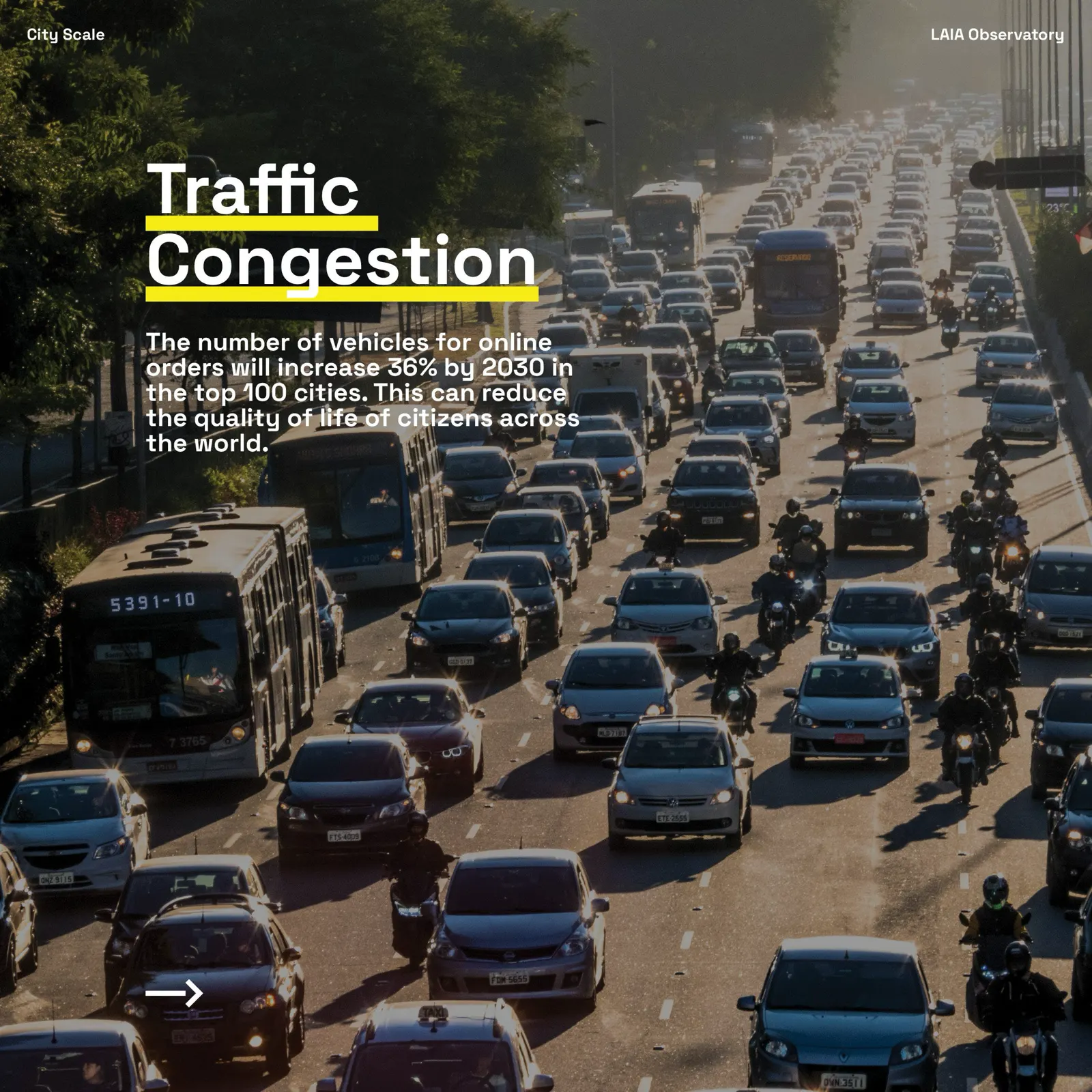
The demand for online shopping is rapidly increasing, exacerbating the last-mile logistics traffic and making it one of the most pressing challenges. According to a 2020 report from the World Economic Forum, the number of vehicles needed for online product delivery will increase by 36% by 2030 in the top 100 cities globally (1). Consequently, emissions will rise, congestion will increase by over 21%, and 11 minutes will be added to each commute, according to the report.
Some existing solutions use robotics and drone delivery, opening the opportunity to improve the quality of life for citizens across the world.
Weather Conditions
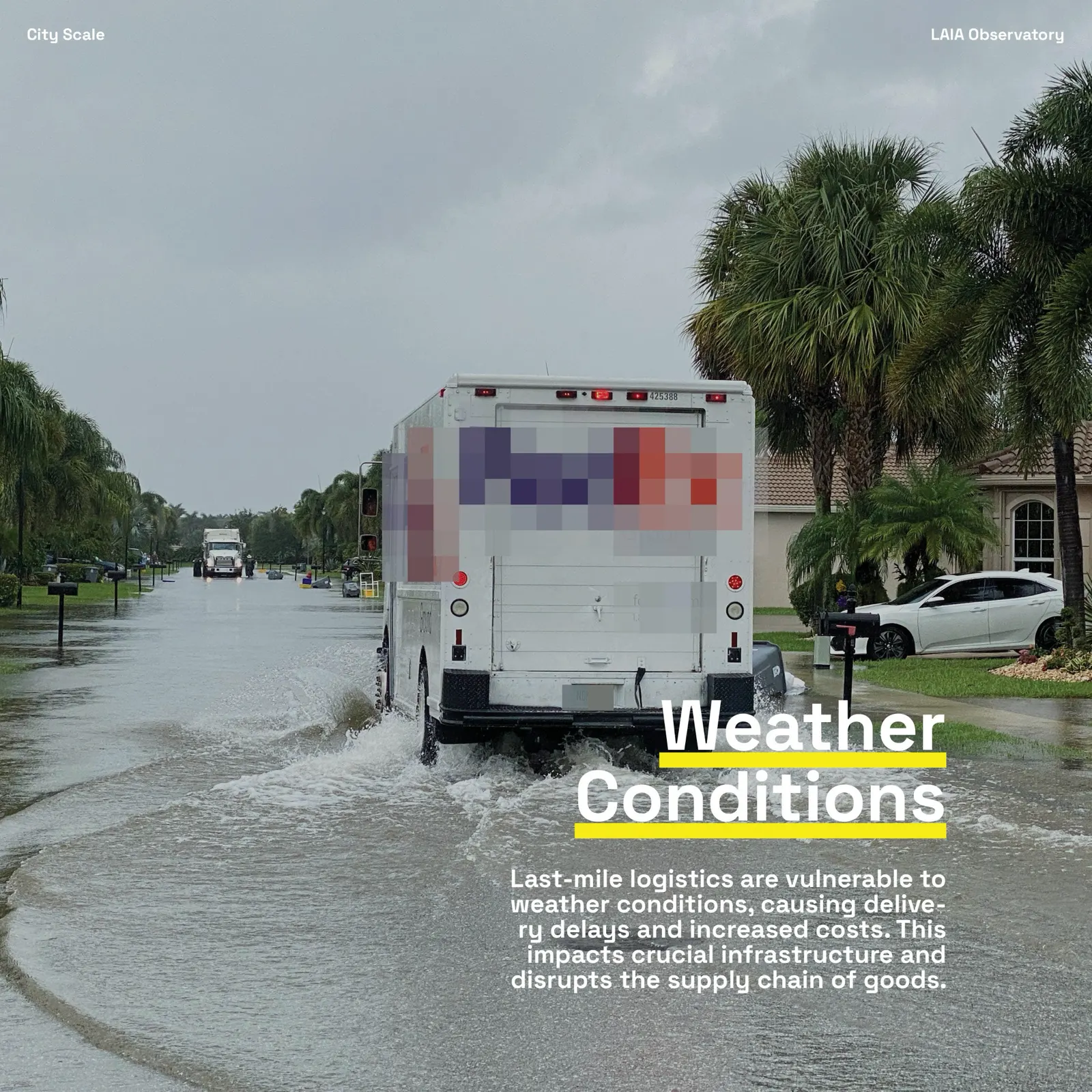
Another key challenge that the online delivery industry, along with the last-mile logistics sector, is facing is adverse weather conditions. Current last-mile logistics operations are carried out in open spaces, making them vulnerable to both expected and unexpected weather events such as storms, snow, monsoons, typhoons, and so on.
These conditions interrupt and delay parcel deliveries in cities, risking the timely delivery of crucial goods for consumers who depend on their purchases. This increases expenses in the logistics chain, affects last-mile logistics operators who are consistently exposed to weather events, and damages critical infrastructure such as roads.
According to a Deloitte study, about 10 to 15% of deliveries fail to reach their destination (2). Additionally, a 2023 survey of logistics professionals conducted by DispatchTrack revealed that extreme weather was the top concern for delays in last-mile logistics parcels (3). This suggests that weather significantly impacts the profitability of e-commerce organizations.
Riots & Vandalism
Due to the shared use of public spaces in existing last-mile logistics practices, every process is vulnerable to street-level events such as riots, vandalism, and interference from third-party vehicles, among others. These disruptions can lead to potential harm to the operator or failed deliveries, resulting in either permanent damage or additional expenses that must be absorbed by the transporter and the provider of goods and services. A study by Accenture found that, on average, each failed delivery costs about $5.
Moreover, civil unrest has doubled in the last decade, according to a study by the Institute of Economics & Peace (4). Given that most of these events occur in the same spaces used by the last-mile logistics industry, this ongoing trend will increasingly impact the sector unless there is a paradigm shift in its current practices.

Small Businesses
Small businesses are increasingly struggling to compete with the price, speed, and convenience offered by large online marketplaces such as Amazon and Alibaba. These platforms have developed sophisticated infrastructures that enable them to offer a range of services, including fast delivery and competitive pricing, which are challenging for smaller enterprises to match.
Moreover, the high fees associated with listing products on these platforms, which can go up to 15% and 40% per sale, and the strict standards for delivery times, present a significant challenge for small businesses which typically operate on thinner profit margins. McKinsey & Company found that while e-commerce growth is crucial, it can also lead to declining profit margins for many retailers (5), especially those who fail to manage the complexities of digital operations.
According to a 2022 report by the Institute for Local Self-Reliance, independent retailers in the U.S. have seen their market share decrease by nearly 40% over the past decade, a trend largely influenced by the growing dominance of e-commerce. This shift has significant implications for local economies, as the presence and success of small businesses are crucial for maintaining the economic vitality and character of communities worldwide.

Bibliography
- “The Future of the Last-Mile Ecosystem”, World Economic Forum, 2020: https://www3.weforum.org/docs/WEF_Future_of_the_last_mile_ecosystem.pdf
- “E-commerce and urban freight distribution in Spain post-COVID-19”, Deloitte, 2020: https://www.deloitte.com/content/dam/Deloitte/es/Documents/operaciones/deloitte-es-operations-e-commerce-and-urban-freight-distribution-in-spain-post-covid-19.pdf
- “How to Deal with Extreme Weather Delays in Last Mile Logistics”, DispatchTrack, 2023: https://www.dispatchtrack.com/blog/extreme-weather-delays
- “Global Peace Index, Measuring Peace in a Complex World”, Institute for Economics & Peace: https://www.visionofhumanity.org/wp-content/uploads/2020/10/GPI_2020_web.pdf
- “Solving the paradox of growth and profitability in e-commerce”, McKinsey 2021: https://www.mckinsey.com/industries/retail/our-insights/solving-the-paradox-of-growth-and-profitability-in-e-commerce
Originally published on Medium on 2 December 2024: read the original.