From Peninsula to Megacity: Mumbai’s Land Reclamation Journey
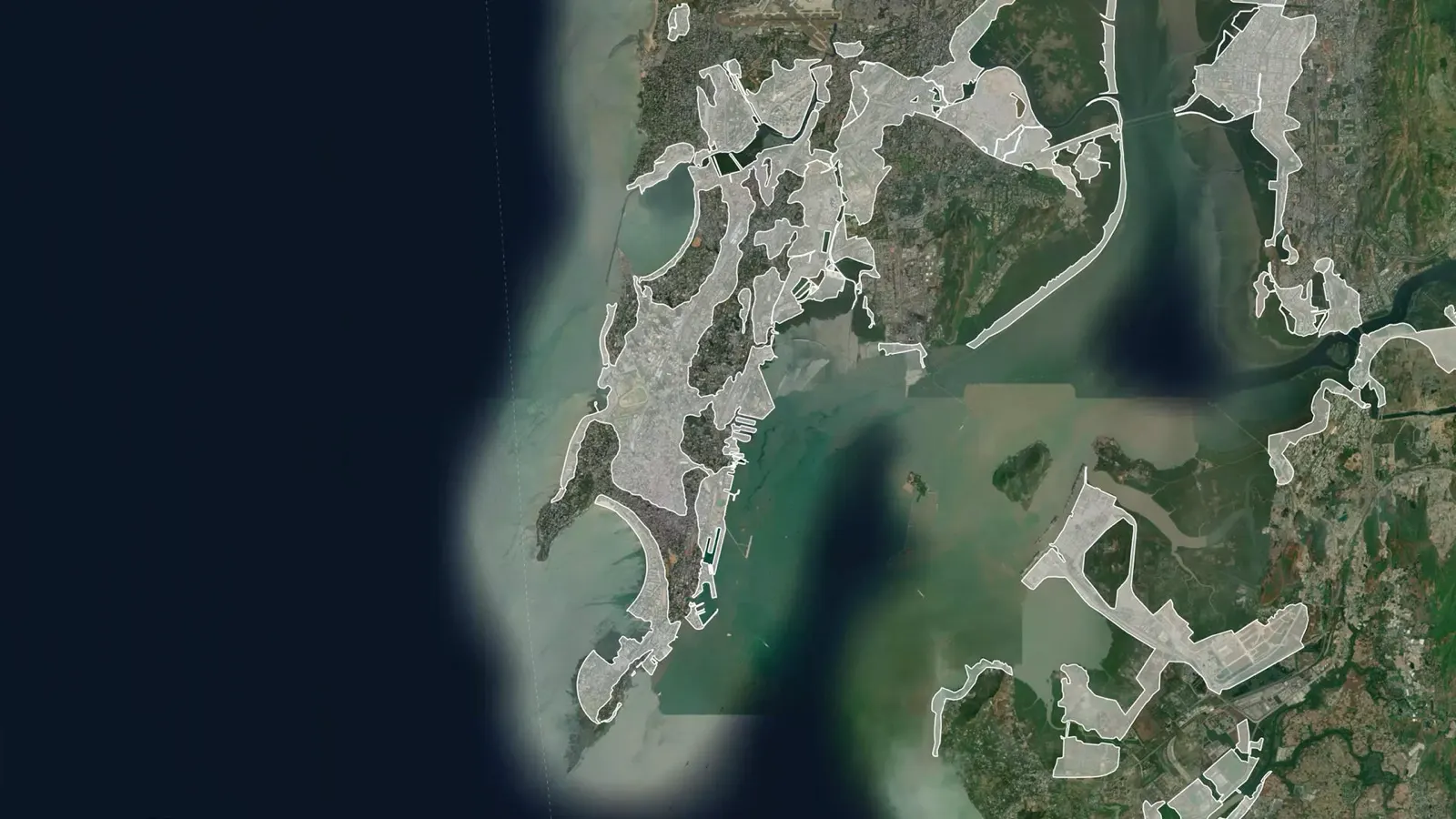
The economic capital of India is growing rapidly. During this century, the city of Mumbai is projected to triple its population, increasing from the current 21.6 million inhabitants in 2024 to around 70 million by 2100, thus becoming one of the five most populated cities on the planet. This will require major interventions to increase its urban land area by the end of the century.
To expand its urban territory in a resilient manner, it is necessary to rethink the foundations of urban planning, considering technical solutions and developing a master plan with a novel approach. Meeting this challenge requires working with advanced engineering to minimize environmental impact, enhance the city’s resilience to climate events, and establish the foundation for a sustainable, smart city capable of adapting to the needs of the growing digital generation.
This is the scope of action of the Landboxes System, a compact land reclamation system. Mumbai’s challenges present an opportunity to apply novel land reclamation technologies that offer solutions to the current and projected scenarios for the city, thus positioning it as a leader in implementing solutions for coastal cities worldwide.
Mumbai’s Background on Land Reclamation
In 1672, the seven islands of Bombay, a former Portuguese and later British colony, began a long process of land reclamation by building dikes between the narrow intra-island passages, aimed at generating additional area for rice cultivation, agriculture, and livestock purposes.
It was not until 1860, with the construction of the Sion-Kurla Causeway, that the entire group of islands became a peninsula, linked to the mainland. By the early 1910s, due to the rapid population growth in the region and the establishment of the city as the economic capital of India, there arose a strong demand for new developable land. Consequently, in the following decades, the initially designated agricultural land gradually disappeared, marking path for new urban area on the reclaimed land. The following video is a summary of this historical process:
Current Status
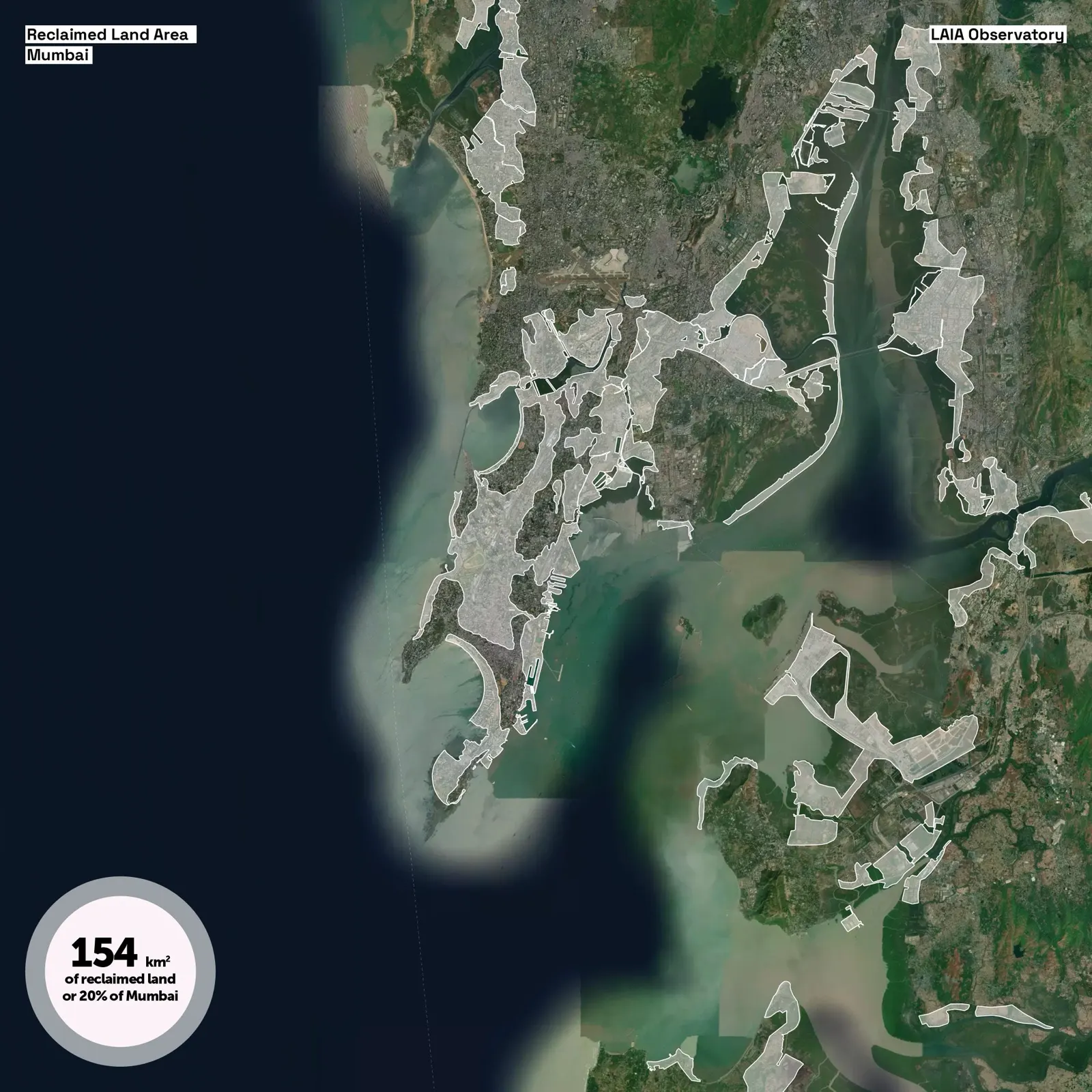
Until 2024, 154,34 km2 of the metropolitan area of Mumbai has been generated by land reclamation, this is about 20% of the total metropolitan territory. However, the Mumbai peninsula has historically witnessed the majority of land reclamation efforts, accounting for 59.64 km² of reclaimed land, which is 48% of the peninsula’s total area.
As a result, Mumbai City has a density of 140,000 people per km2. To maintain this density while accommodating the projected total population of 70 million by 2100, Mumbai would need to expand its area to a total of 490 km². This implies the addition of 330 km² of new land within this century, presenting opportunities for innovative technical interventions and master plans capable of facilitating sustainable growth.
This scenario provides a wide scope for engineering and advanced consultancy services in this field. A comprehensive analysis of current interventions enables LAIA Stem to focus on bathymetric and geological studies to gather information for potential intervention areas.
At LAIA, we are developing land reclamation solutions using caisson technology. If you are interested in our innovative solutions, you can find more information on our Landboxes land reclamation systems by following the link below:
https://www.laia.org/coastal-resiliency/landboxes
Originally published on Medium on 18 April 2024: read the original.